
How Typing Games Builds Confidence in Autistic Kids
One of the best parts of homeschooling is the freedom to teach in ways that fit our children’s strengths and needs. For many autistic learners, typing can be an empowering skills to introduce. Beyond just a practical tool, using typing games can open new doors for communication, learning, and independence.
For our family, typing has been an important tool for writing because our fine motor skills, including handwriting, are weak. By learning to type, my students can still share their ideas without needing to hold a pencil.
Typing Gives Autistic Kids a Voice
Some autistic children find spoken communication challenging, especially when they’re overwhelmed or because they process language differently. Typing provides a calm, predictable way to share thoughts without the pressure of speaking on the spot.
Our family has a Google Chat group that we use to communicate. Sometimes we share a funny meme, and other times it’s a poll about the dinner menu. Everyone can participate with it when they are free, and we are also modeling life skills with good online communication.
When your child can type, they gain a new way to participate in conversations, answer homeschool questions, or express emotions. For many, it’s a confidence boost — a reminder that their ideas matter and can be understood.
Now that I have teenagers, they are learning to make their own plans with peers, and in this generation, that means using text and email to communicate. We are helping our kids develop online social skills as they manage their own social life and create their own texting groups with their friends.
Typing Makes Learning More Accessible
In the homeschool setting, typing can transform how your child approaches schoolwork. Kids who struggle with handwriting or fine motor tasks often find typing easier and less tiring. It lets them focus on what they want to say, not how to form each letter.
Fine motor delays were a part of our homeschool from the beginning, and I quickly learned to separate the content learning from the skills an activity required. My child could understand the book they were reading, even if they got frustrated filling out a comprehension worksheet because of the writing involved. We quickly found other ways for my students to share what they were learning, often through digital means. We started typing unusually early to replace handwriting activities.
Once typing becomes comfortable, it naturally supports every subject area — from writing essays to researching online to journaling. For many families, it’s the key to helping a child work more independently and enjoy learning.
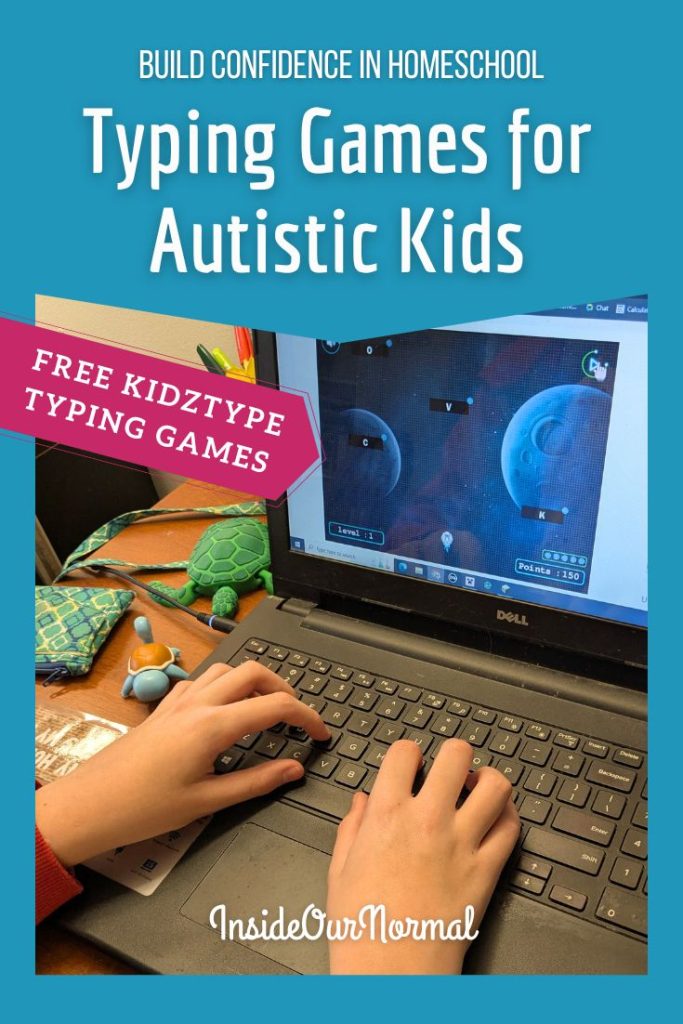
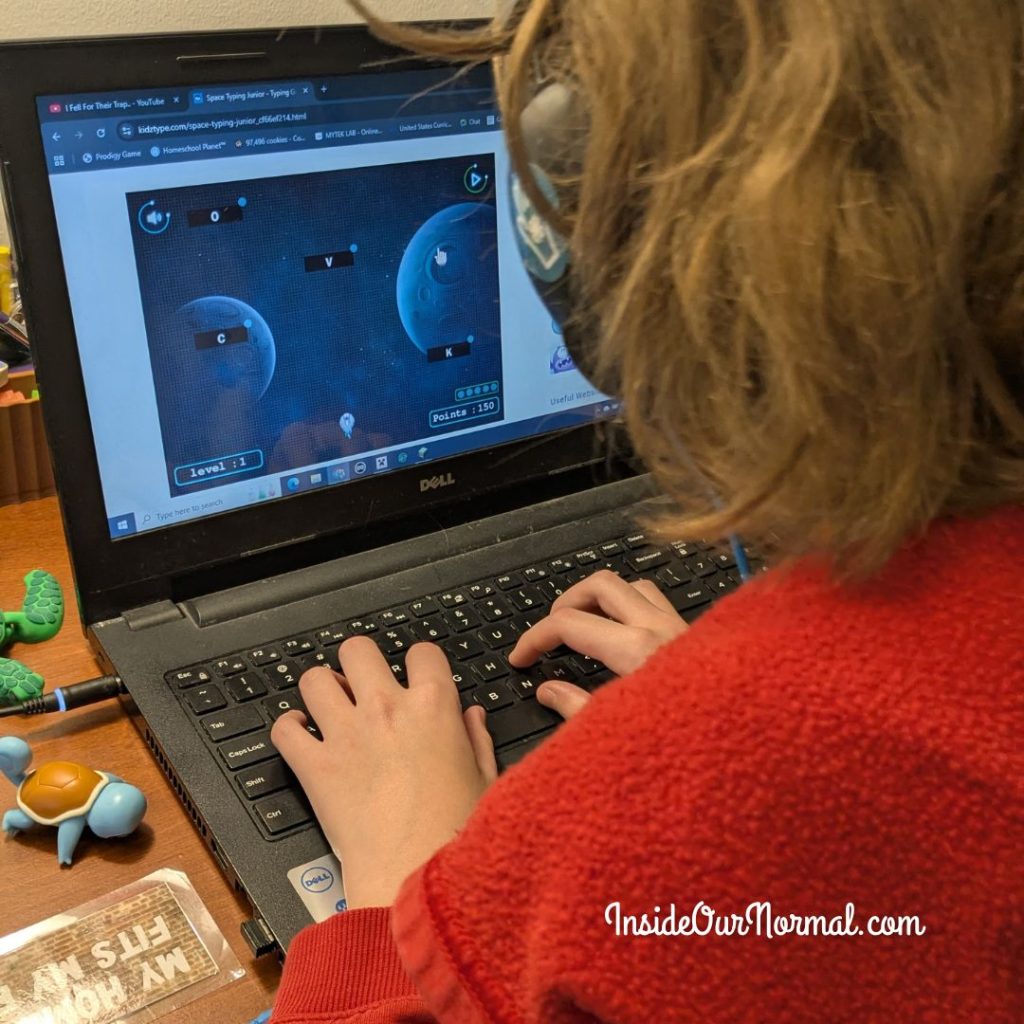
One easy-to-use tool for teaching typing is KidzType Typing Games, which let kids practice at their own pace without pressure. Because the games are free and easy to customize, they fit beautifully into the homeschool routine—especially for autistic learners who do best with short, focused practice sessions.
This year, with 3 kids in upper grades, we assigned each kid their own laptop. Their school work is done as a mix of digital assignments and workbooks, and offline. It was time for them to each have ownership of their devices and be able to set up their own preferences. We have eliminated the conflicts over sharing the laptops, and each can manage their own schedule without interfering with their siblings.
Try a few free typing games from KidzType to see which style motivates your learner best!
A Skill That Builds Focus and Organization
Typing isn’t just a muscle memory activity. It helps strengthen executive function skills like attention, sequencing, and organization. Lining up thoughts in sentences and seeing them appear on-screen provides immediate feedback and structure.
One skill we are currently working on in our house is personal responsibility, particularly when it comes to managing their own assignments and time management. One of the kids has chosen to use Trello as their assignment book. They can access their to-do list from their phone, tablet, or laptop and can easily make adjustments by dragging and dropping each assignment’s card instead of crossing it out and rewriting it in a paper assignment book. This makes them feel confident in changing their schedule instead of feeling like they messed up when they changed plans.
Sensory-Friendly Learning at Home
For sensory-seekers, a good mechanical keyboard can provide auditory and tactile feedback. Nothing sounds more productive than some good keyboard clicking. Homeschooling gives us the flexibility to use typing games in a way that respects your child’s sensory preferences. If they prefer a quiet keyboard, you can find those as well. I have seen keyboards in a variety of colors, if that is something that can motivate your kids.
- You can choose keyboards with just the right amount of sound, texture, or resistance.
- Create a quiet, low-distraction typing area.
- Offer sensory breaks or supports — like a fidget, weighted lap pad, or gentle background music.
KidzType’s Dance Mat Typing and other free games offer different rhythms and visuals, so I can pick the ones that suit each child’s sensory preferences—some like the colorful games, others prefer simple practice activities.
Teaching Typing at Their Own Pace
When it comes to teaching our kids to type, there are two parts to the skill. First, we want them to be familiar with a keyboard and understand the value of digital communication, and second to efficiently use all their fingers to type faster. It isn’t necessary to rush or follow a rigid program to build efficient typing skills. My kids all started typing by participating in Minecraft servers with others. They needed to type commands and chat to participate with the other players. They also started by typing short school assignments and participating in our family text group. They learned the keyboard layout because they had to use it to reach their activity goal.
To teach kids to be efficient at typing, it is good to use typing games for kids like KidzType. Like any new skill, start with short practice sessions— five to ten minutes a day is plenty. Focus on comfort and accuracy first, not speed. Celebrate progress — every new word they type is a step toward independence. For extra help motivating kids to practice, look for typing games, apps, or short prompts based on your child’s interests.
Preparing for the Future
Typing is more than just an academic skill; it’s a lifelong one. As your child grows, typing will help them communicate online, complete digital coursework, or even prepare for future jobs. Most importantly, it gives them a tool for self-expression and self-advocacy — skills that will serve them far beyond their school years.
With two parents who work on computers daily, my kids were introduced to them early. My oldest is the same age as Minecraft, and Dad has played the game since it was released. It is a game they share, and now more than one of my kids is looking at a computer-based career.
Final Thoughts
Teaching typing in your homeschool isn’t about keeping up with technology — it’s about giving your child a way to connect with the world. Technology isn’t going anywhere; the best we can do as parents is to give our kids the skills they need to use it appropriately and efficiently.
Whether it’s writing a story, sending an email, or sharing their feelings, good typing skills can open a window into their thoughts and creativity. Start exploring free typing games for kids at KidzType and help your child build lifelong confidence through typing.