
Social & Emotional Resources for Elementary Ages
Recently, we have been updating our family toolbox with new strategies and resources. At some point in the process of reviewing the assessments for our last IEP, we realized with surprise that a big cause of the problems we’d been seeing recently is that the tools we had developed when they were a preschooler have been outgrown. Their triggers and struggles have changed; they need more support with social skills. They are also now more capable of being responsible for their own reactions.
They are maturing and learning how to adapt and advocate for themselves. As for any child, what works for a 3-year-old doesn’t work for an 8-year-old or a 15-year-old, but since the change is so gradual, it never occurred to us to question whether what we were using was still valid or not. With the help of an Occupational Therapist and Psychologist, we are upgrading our family toolbox for the next season of life, elementary school.
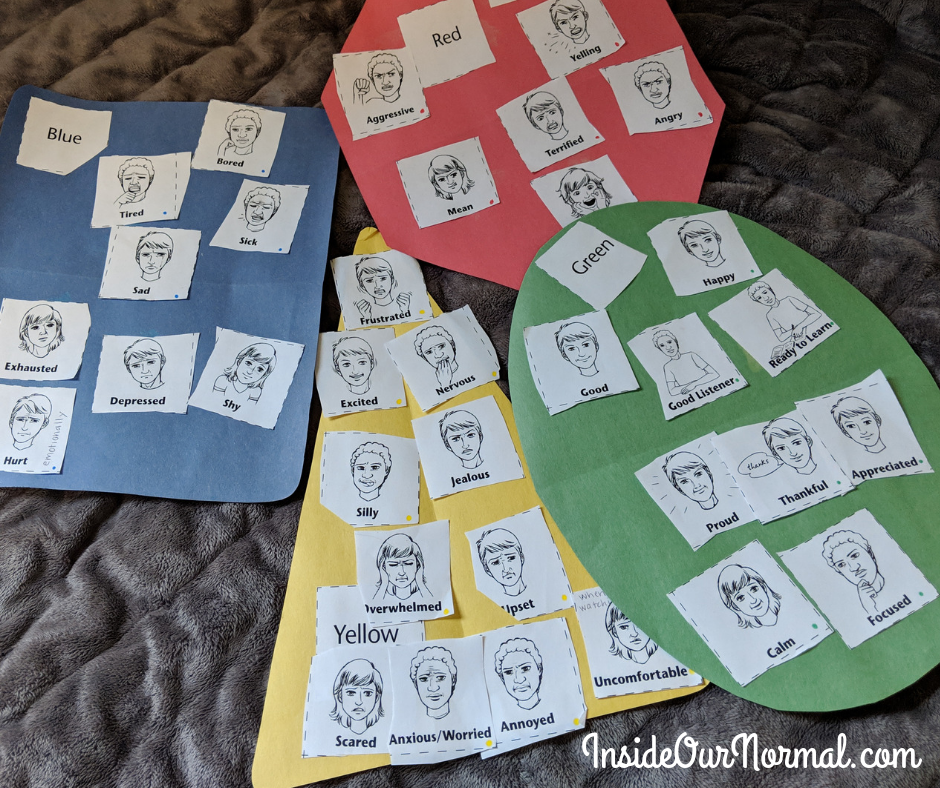
Zones of Regulation
The Zones of Regulation is a framework to talk about emotions. Emotions can be intense and feel out of control, making them scary to someone who has trouble controlling themselves. The Zones give a system to classify emotions into categories which make them easier to discuss. Our Occupational Therapist (OT) shared this program, and it’s been a great help for us to identify how they are feeling so they can accurately communicate it to others. Instead of getting loud and frustrated when their brother is on the computer, they are able to tell us that they are jealous that their brother is on the computer already when they want a turn. Another recent example is that they can express their frustration when they can’t find the Lego piece they are looking for, instead of screaming and running in circles.
Anger Management Handbook
Learning the Zones of Regulation led to our next tool, an “Anger Management Handbook”. This kid is a lover of Angry Birds and often references the characters in their intense emotions. One of the birds, Red, is sentenced to Anger Management Classes in the movie after an unfortunate incident. I can’t take full credit for this project as we complied several resources we found on the internet to make thier handbook. I found The Home Teacher’s Blog which inspired the project and make up the bulk of their Handbook. She made the bulk of the pages I included in the Handbook. Additionally, I took her blog posts of explanations and reworded them to make additional pages for their book.
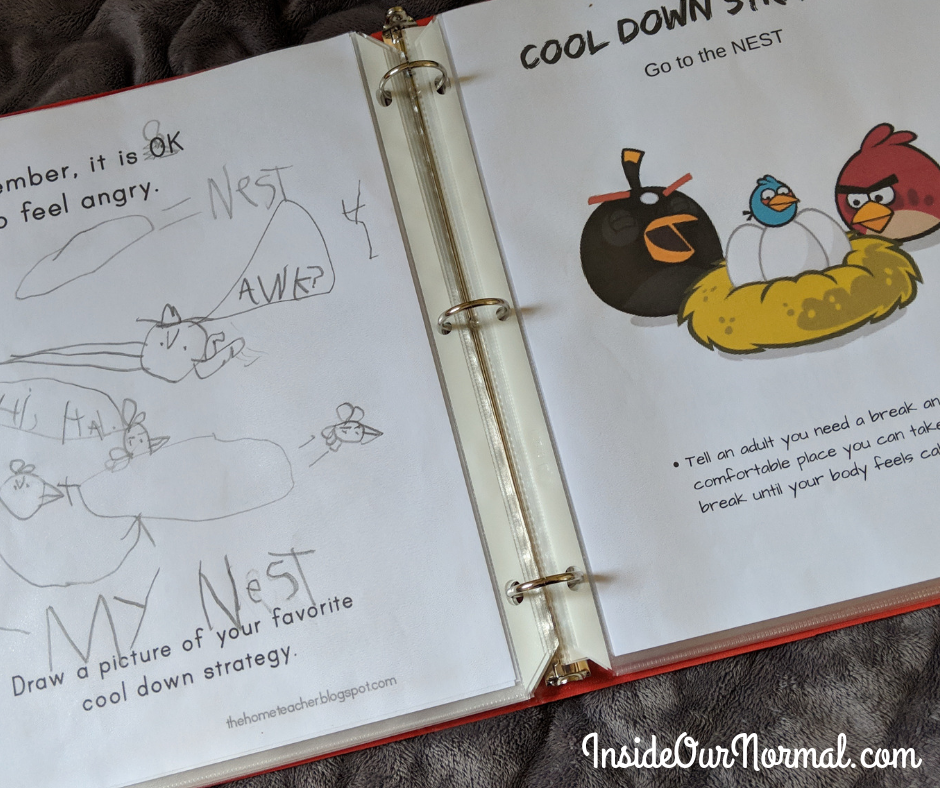
My child is very visual, and having the Handbook available to them to read regularly helps them internalize the ideas. Years ago, I found an emotion scale with the Angry Birds that they carry in their backpack toolkit. I never knew they read it until now, when they told me. We included that, as well, in the front pocket as a reference guide to look at during a tense moment. I like that the page includes both emotional levels and calm-down strategies on the same page. Learning to be aware of their emotions and their effect on others is an important social skill for students to master.
Superflex’s Very Cool Five-Step Power Plan
Our Psychologist introduced us to SuperFlex as a framework for learning social skills and awareness. As soon as I saw it, I knew my kid would love it. It uses a set of characters and stories that show kids how to have flexible thinking. It can make social situations difficult when their brain gets stuck on ideas. There are “Unthinkables”, villains with names like Glassman and Rockbrain. And “Thinkable” superheroes with cool names like Cool Q Cumber and Rex Flexinator are available to help you overcome the villains.
There are 5 Power Pals to help you access a social situation and making good choices. It was so exciting last week to have my kid use thier Power Pals to show me how to think through an incident. Later they felt confident from defeating the “Unthinkable” we were dealing with. You can download the Five-Step Power Plan from Social Thinking to use at home.

Adjusting our Communication patterns
Another tool we have added to our family toolbox is new vocabulary. When a challenging situation occurs we use the words “Expected/Unexpected . New or unexpected things can throw them off their routine. We will often say that it is “wrong”. Their rigid thinking will often correct an adult trying to show them how to do something by telling the adult they are “wrong” and that the “right” way is the way my kids wants to do it. It has been helpful to reframe these kinds of situations away from wrong/right and begin using the terms unexpected/expected. “You are upset because you didn’t expect to run errands after class today.” “I understand that you had different expectations on how the afternoon would look. First, we need to do this errand, then you can have the playtime you expected to have this afternoon.”
Talking about things being unexpected in their mind regardless of whether it is unexpected to the rest of us is important, and validates their thinking and helps us work through the change without calling it wrong. The Autistic mind works differently than most but its not wrong.
These are a few of the new tools we have added to our toolbox for our Elementary School aged kids. What tools have you found that work for your family and make your days successful?

yay for having excellent tools to work with.