
Making Mistakes on Paper First: A Smarter Way to Teach Personal Finance for Teens
The other night, one of my teenagers came to us after we had sent them and their siblings to bed.
“Mom and Dad, we need to talk…”
My thoughts immediately started trying to guess what was coming next.
“I’m scared about growing up, do I have to?”
Well, that wasn’t what I expected to be the discussion starter.
After lots of reassurance that mom and dad would be here and we would help them grow up at their own pace, they headed back to bed. But it got me thinking, for an autistic child, we have to be much more intentional about teaching the growing-up because change and transition are scary on a good day, and growing up is a big change.
After that conversation, I found Beyond Personal Finance to help us start teaching some of those growing-up skills with their course in our homeschool this year. Like the name suggests, it teaches personal finance for teens, but also so much more. I see the confidence about the future growing in my student because the simulation-based class has empowered them.
Beyond Personal Finance is a simulation-based class designed for homeschool families, giving teens the chance to experience the impact of their real-world choices on their financial future. Students start the class by going through the process of choosing a career based on their personal interests and choosing an initial budget based on their chosen spending habits and lifestyle choices. Later, they are guided through a series of financial decisions that impact their annual budget. Each unit also throws a “curve ball” just like real-life surprises we all encounter every day.
More Than a Class—A Launchpad for Career Discovery
One of the first things I noticed about the course was the way the student is empowered to choose. In lesson 1, students are directed to complete a free career interest assessment to guide them in choosing their future career for the course-long simulation. Because the course is using real-world data, the student is given limitless opportunities to choose what they truly want to do instead of a list of 20 generic career fields.
The course uses Career One Stop, a career exploration site sponsored by the US Department of Labor, which provides detailed information on careers and job opportunities. It gives students realistic and current opportunities to explore. I even had my other kids do the same assessment just for fun.
For my autistic student who up to now had not yet begun exploring their career interests, Beyond Personal Finance gave them a safe way to think about what they might enjoy doing in the future after they graduate. Since they are taking the class as a freshman, I can use their career interest results to inform the homeschool electives we choose for the rest of high school.
Letting Teens Build Budgets That Reflect Who They Are
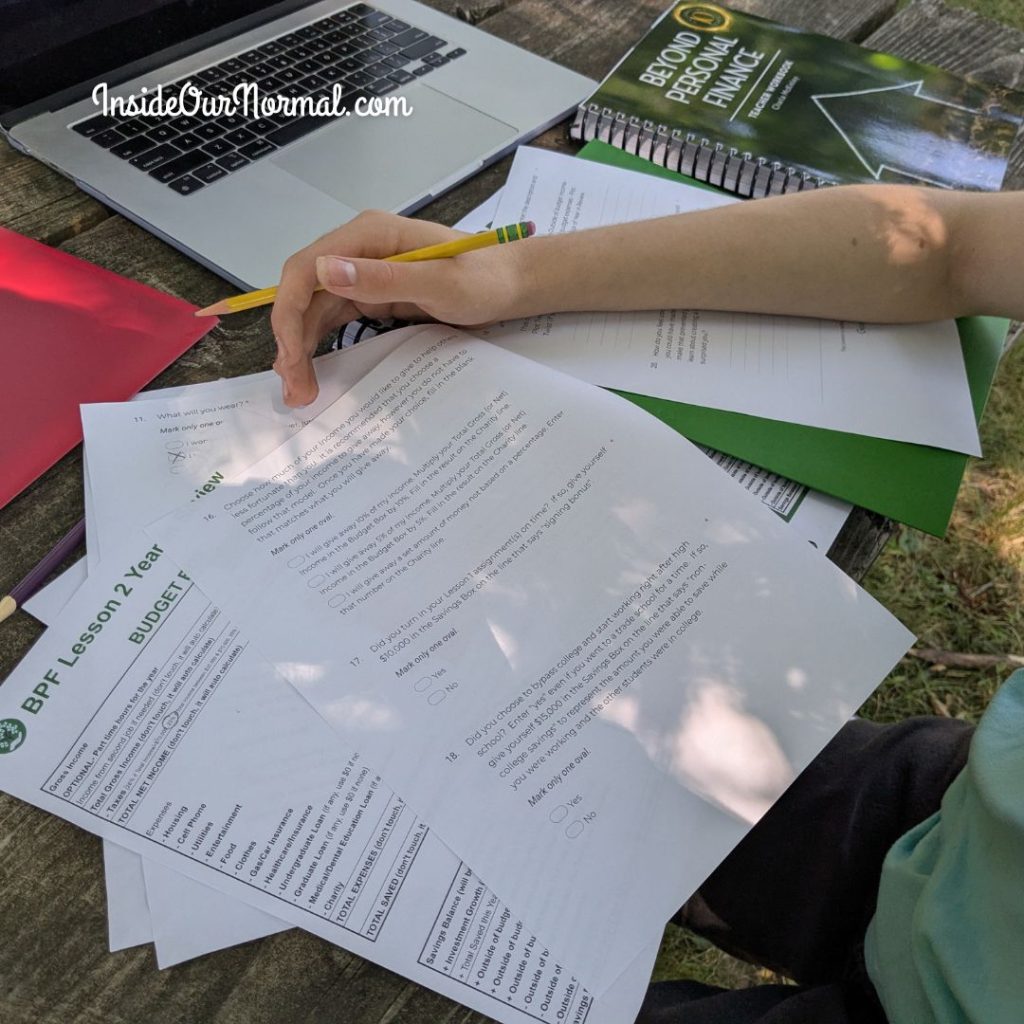
In lesson 2, students create their first budget based on the salary of the career they chose in Lesson 1. The course gives students different sets of numbers to use based on their lifestyle choices in each budget category. It was interesting to watch my student consider the different options based on their personality and how they want to live.
Students are required to choose a realistic career for their first real-world job and their salary reflects that. They get to make the decisions and trade-offs that come with budgeting. My student likes to play video games and watch movies, so they knew they would want to have the most expensive utility option that gave them high-speed internet. They also knew they would rather eat at home than go out for meals every day, so they chose a lower food budget level. Each budget category had 4 different lifestyle options, so students can truly consider what they want their future life to be as they mix and match the options to reflect their personality.
My student thought that making a budget would be overwhelming, but the course provided clear choices, and the spreadsheet let them experiment to see how they impacted their simulated life. Seeing their first budget work out on paper with a healthy savings left over left them feeling encouraged about the idea of growing up.
Exploring the Financial Impact of Life’s Big Decisions
Each lesson, or year, as the class refers to them, introduces a new financial topic for the student to explore. After students choose their basic starting budget in lesson 2, they progress through real life situations and explore the financial side of each decision that comes up. Again, each lesson makes them think about their lifestyle level as they make their choices.
In Lesson 9, students learn about buying a house instead of renting one. There are 4 prepared options for students to choose from. In addition to choosing the price and increased utilities of owning, it also gives students information on the additional commute to work and the added travel costs for their budget.
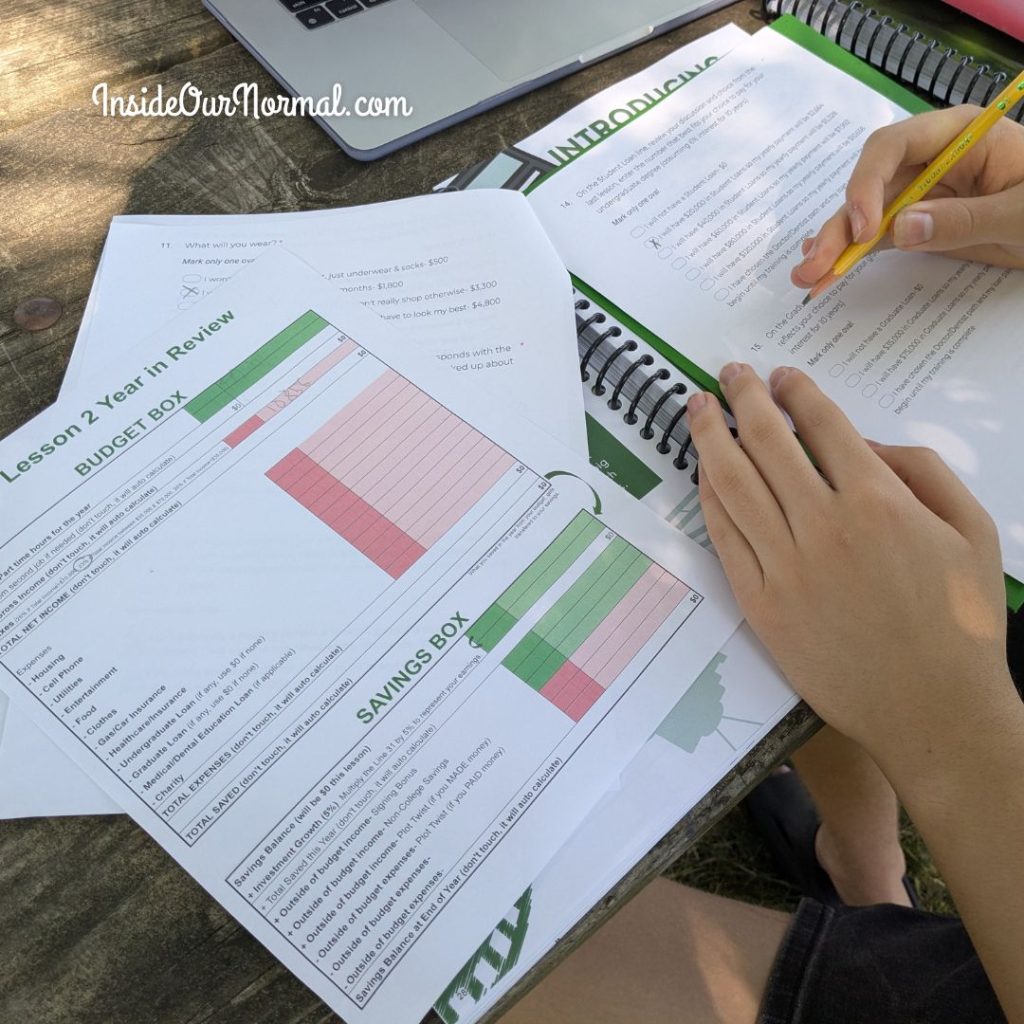
In Lesson 3, when they purchase a car, they can choose the practical, comfortable or sporty car. There is always the option to add a loan to cover what they choose to buy. At the end of each lesson, they update their year-in-review budget to reflect the changes of that lesson’s activities, and over the course of the lessons students can see how each choice changes their budget and financial health.
Financial Curveballs: Building Resilience Through Simulated Surprises
Life does throw curveballs. We can’t plan for every circumstance. The same is true in this personal finance for teens course; Beyond Personal Finance includes a plot twist in most lessons. Once all the decisions are made for the lesson topic, students spin a wheel to see what unexpected events happened. There are both income opportunities and unexpected expenses on the wheel. What you experience is a game of chance.
As life imitates learning, our family had a few surprises pop up the same week my student had their first plot twist, leading to some honest conversations and learning moments as a family.
Flexible Format, Real Results: Learn Together or Independently
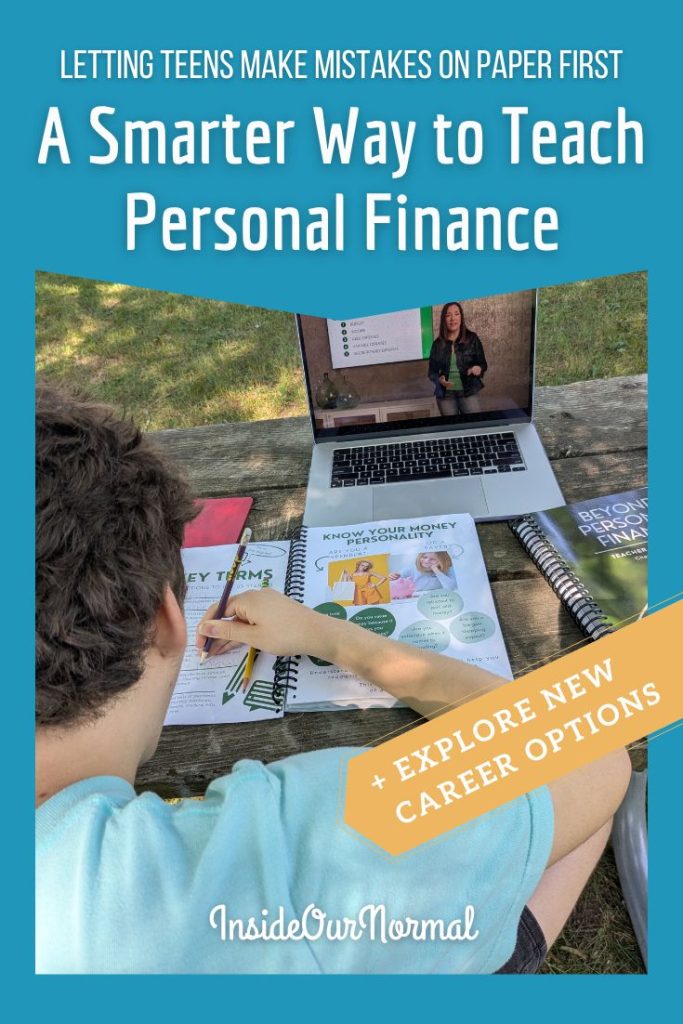
The course is set up to be flexible in how it is taught. It would make a great co-op class or for most students to complete independently. For my student, it was best to complete it all together. Each lesson has a video in the student portal and workbook pages to complete as they follow along.
The teacher/parent portal has the same materials as well as additional helpful resources.
After completing the video, there are additional activities and homework to complete as you make your choices and work on your budget. These assignments are available on a Google form that students can turn in via email, as well as a PDF they can download and print to complete offline. We are using the print option so we can complete it together more easily. When students are given a choice to make, the different options are listed in detail on the Google Form. There are also reflection questions for the student to share why they made the choices they did at each week’s lesson.
The yearly budget is available as a Google Sheet that students can copy and use. It is helpful to use the digital version for this because it has the built-in formulas to automatically update the columns and save the student time. I am making my student print out the budget after each lesson so we can compare them after each choice.
A Safe Space to Dream, Decide, and Discover What’s Possible
As we work through the lessons and my student learns about each life choice and the options available to them, I can see their confidence growing about what the future can look like. My student is getting to see in a concrete way how the choices they make impact their future life.
When we made their initial budget, the hardest decision was choosing where to live on paper. They knew they didn’t want to live with roommates so that left the cheapest option of living at home and the most expensive option of living alone in an apartment. We were able to look at the rest of their budget choices and then revisit the two options and see what they could afford as well as talk about the realistic options about what our family home would like when they were older. By choosing simple lifestyle options in other areas, they could afford to live on their own, which they liked.
Beyond Personal Finance is a great course because it teaches students through their own choices. Students can choose a realistic lifestyle and future that matches their personality and see where those choices take them. Some of the lessons in the class may not be in future for everyone, like being parents or having a divorce, but I’m glad they are included so students have an opportunity to see how those choices affect their financial future and lifestyle options. It is a simulation after all, making it a safe place for students to experience all the possibilities the future holds.