
Reading Through Time: a Charlotte Mason Homeschool History Curriculum
A Middle School History Curriculum from Beautiful Feet Books
For years I was dreading teaching American History in our homeschool because I want to teach my kids the rich variety of cultures that make America the great melting pot that it is and not just a European centric perspective. When we studied American History a few years ago, I pulled books from a variety of places and put my own reading lists together to make it work.
I’m really excited to get my hands on the updated Beautiful Feet Books Early American History for 7th-9th graders. They do a great job of including literature from a variety of perspectives in their new book selections which is exactly what I’m looking for! We used some of their Early American History books for 4-6th graders a few years ago.
Watch the video as I introduce all the titles in the updated program.
Learning History Through Literature
Picking our homeschool history curriculum is one of my favorite parts of teaching my kids because i can choose to use stories instead of dates and dry facts. Reading biographies, and historical fiction allows the whole family to experience history in new ways and think deeply about what the time was like as we read the mundane details of the characters we meet in the literature selections. Beautiful Feet Books is known for picking great living books for their curriculum packs.
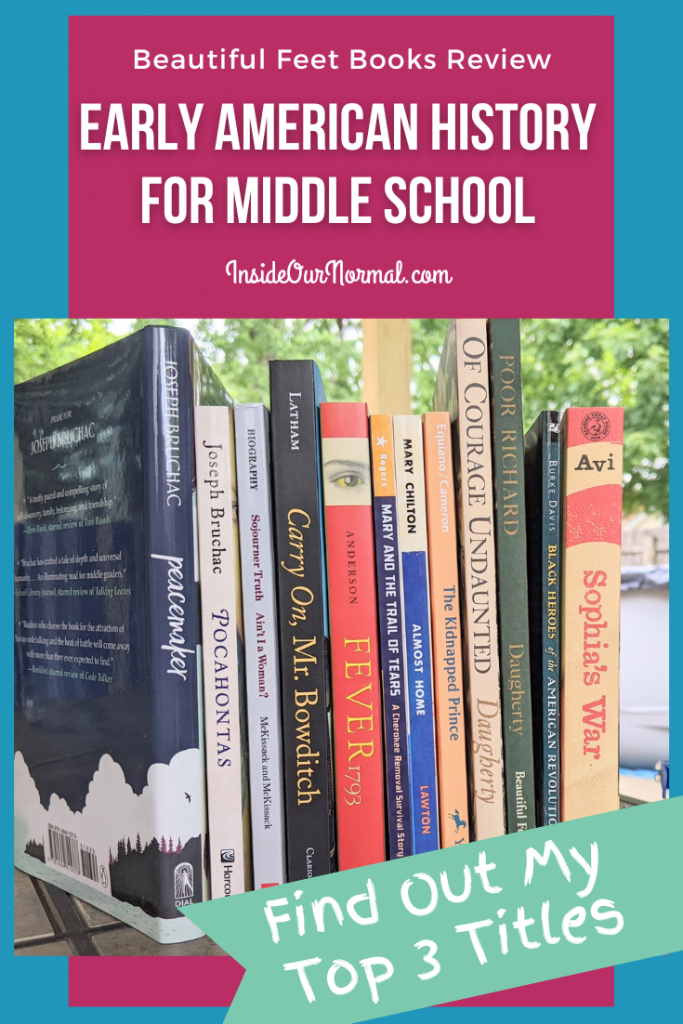
Three of the Titles I’m most excited about in this Homeschool History Curriculum
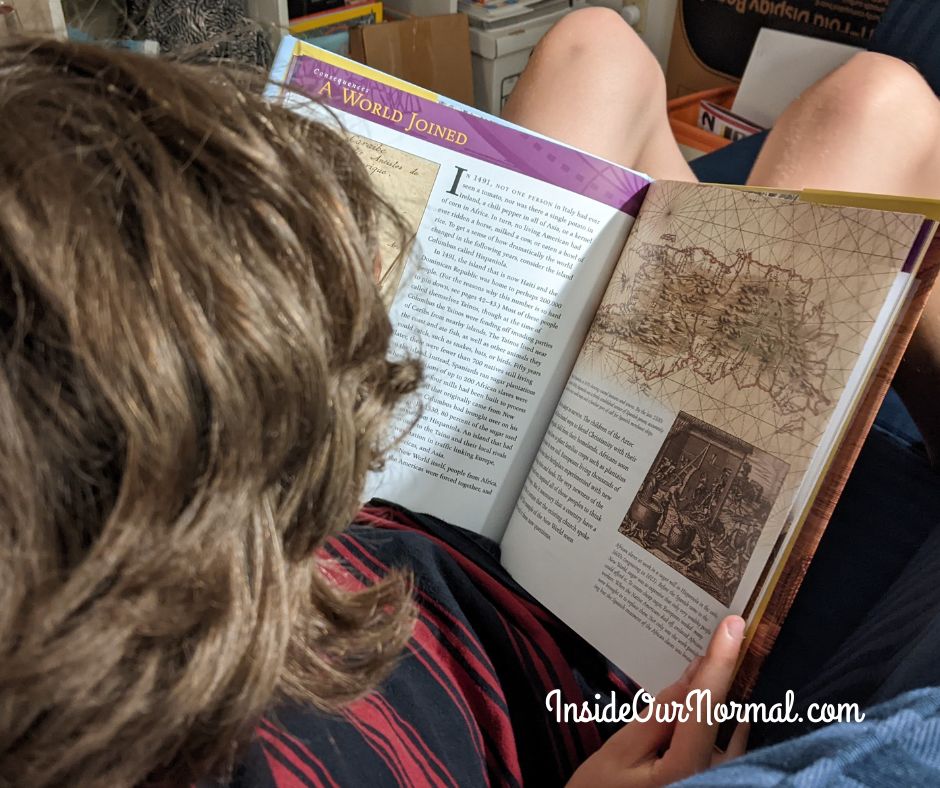
The World Made New: Why the Age of Exploration Happened and How It Changed the World by Marc Aronsen & John Glenn. This National Geographic hardback includes lots of timelines, maps and charts. I have a weak spot for any graphic heavy book packed with information. It is suggested for 3rd grade and up. The book explores both the variety of early European explorers who came to America and the impact and and long term effects of their different missions. The timelines and maps really give perspective and context to the travels.
The Kidnapped Prince: the life of Olaudah Equiano by Ann Cameron. This book is Olaudah Equiano’s autobiography adapted for younger readers. I first heard Equiano’s story when our family watched Amazing Grace, which take place when he is an adult and working for abolition of slavery in England. Equiano was a African prince kidnapped and sold to be a slave and later purchasing his own freedom.
Sophia’s War by Avi. A fictional story of a 12 year old girl, Sophia, who is pulled into the Revolutionary War when her brother is taken prisoner and she tries to find him. Her fictional story becomes the background by which we get to experience the treatment of American prisoners by the British during the war and the reader gets a peek at the relationship between British Major John Andre and General Benedict Arnold of the American army when Sophia works to prevent treachery!
Easy to Follow Teacher’s Guide
One thing that I immediately noticed as I started looking at the materials included in the Beautiful Feet Book Early American curriculum was that is there no one book that guides our learning during the year, or spine book. Instead there are several groups of books to guide the learning for different units. The books are divided into five different units and read together to tell different parts of American History from the First Peoples to setting the stage for the Civil War.
In the Teacher’s Guide, each unit introduction includes a variety of helpful information to help you plan the unit and gives you ownership over the learning projects and assignments for your family. There is a supplemental suggested reading list, aptly named Rabbit Trails. I love that they suggest you follow interesting stories from the time being studied and provide resources to get you started!
There is also suggestions and links for hands on projects and activities related to the unit, for the hands on family (which isn’t me). This is a middle school level program so each unit introduction also includes both creative writing and report writing topics to assign during the unit.
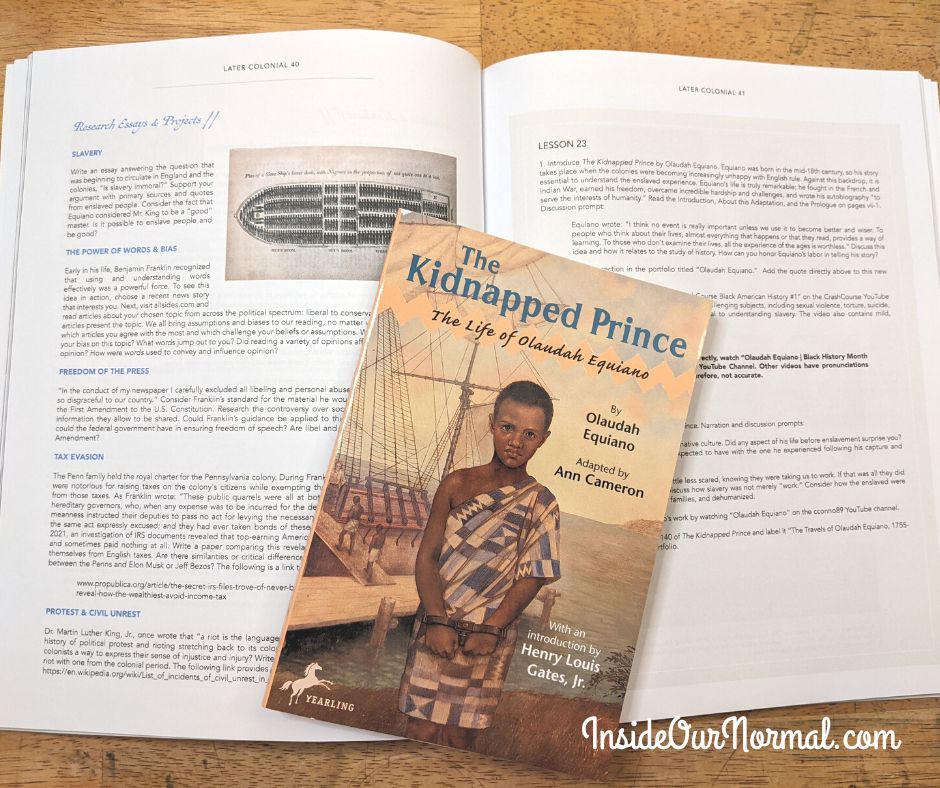
Plenty of room for Projects and Rabbit Trails
The suggested pace of the Beautiful Feet Books homeschool history curriculum is to do two lessons a week, allowing it to be completed in a traditional school year. That leaves the other three days of the week for rabbit trails and other activities do be done without rushing through the assignments.
In the Teacher’s Guide each lesson is outlined clearly making it easy to grab the needed books and go. Reading assignments for the lesson are listed first followed by suggested discussion or journaling questions. Somes lessons also include additional project suggestions or assignments.
There is no independent student guide for this program, something one might expect as students are growing in independence and ownership of their school work. All the instructions you need are in the teacher’s guide. This does encourage the work to still be done as a family unit which creates more opportunity for broad discussions than if the student were to work complete independent. Students will want a notebook to record their journal assignments and collect other assignments during the year.

Beautiful Feet Books for Outside the Box Kids
Beautiful Feet Books‘ material are all inspired on the Charlotte Mason’s teaching ideas which include reading great books, discussion of the great ideas, hands-on handicraft projects and helping the student discover knowledge instead of feeding it to them.
What makes Charlotte Mason and Beautiful Feet Books a good fit for Outside the Box kids is their approach to leading kids to discover knowledge. This can happen at whatever level the child is at. The emphasis on discussion of ideas is great too, and takes the pressure off of being able to write answers down on paper all the time, which this Outside the Box family finds valuable.
Reading Aloud together and working projects inspired by what you read is a great way to learn in my book and why Beautiful Feet Books continues to be at the top of my list for homeschool history curriculum.