
Inside Our Homeschool… Learning Outside and On the Go
This post is part of a series of homeschool snapshots. No two families are alike so why should your homeschool. Head to the Event Page to read the rest of the stories and find your tribe.
You don’t have to use a textbook to teach kids about landforms and geography in the United States. Just start right where you are homeschooling outside. We don’t have mountains, or glaciers, or massive waterfalls nearby, but we do have some pretty neat stuff.
Our state has beaches, estuaries, coral reefs, rivers, islands, forest, marshes, hammocks, and grasslands. The best way to see these things is to leave our house and explore! We love to travel to learn, even if it’s just a 10-minute-away field trip!
Hello. I’m Meredith Curtis, a huge fan of homeschooling. I taught my five children for 25 years (they are now in their 20s and 30s) and I have 6 grandchildren who are homeschooled. We love the beautiful Florida sunshine and have weathered many hurricanes.
Our favorite place to visit for homeschool geography lessons is the nearby beaches in New Smyrna. Two are very rustic with sand dunes and lots of tall sea grass. I often packed my kids up and spent the day at the beach. They hunted for shells, dug in the sand, chased sea birds, and played in tide pools.
Tide Pools
Tidal pools are left behind when the tide goes out – they are a fascinating look at sea life. You can find little fish, seaweed, and sometimes barnacles, sea snails, anemones, and sea stars.
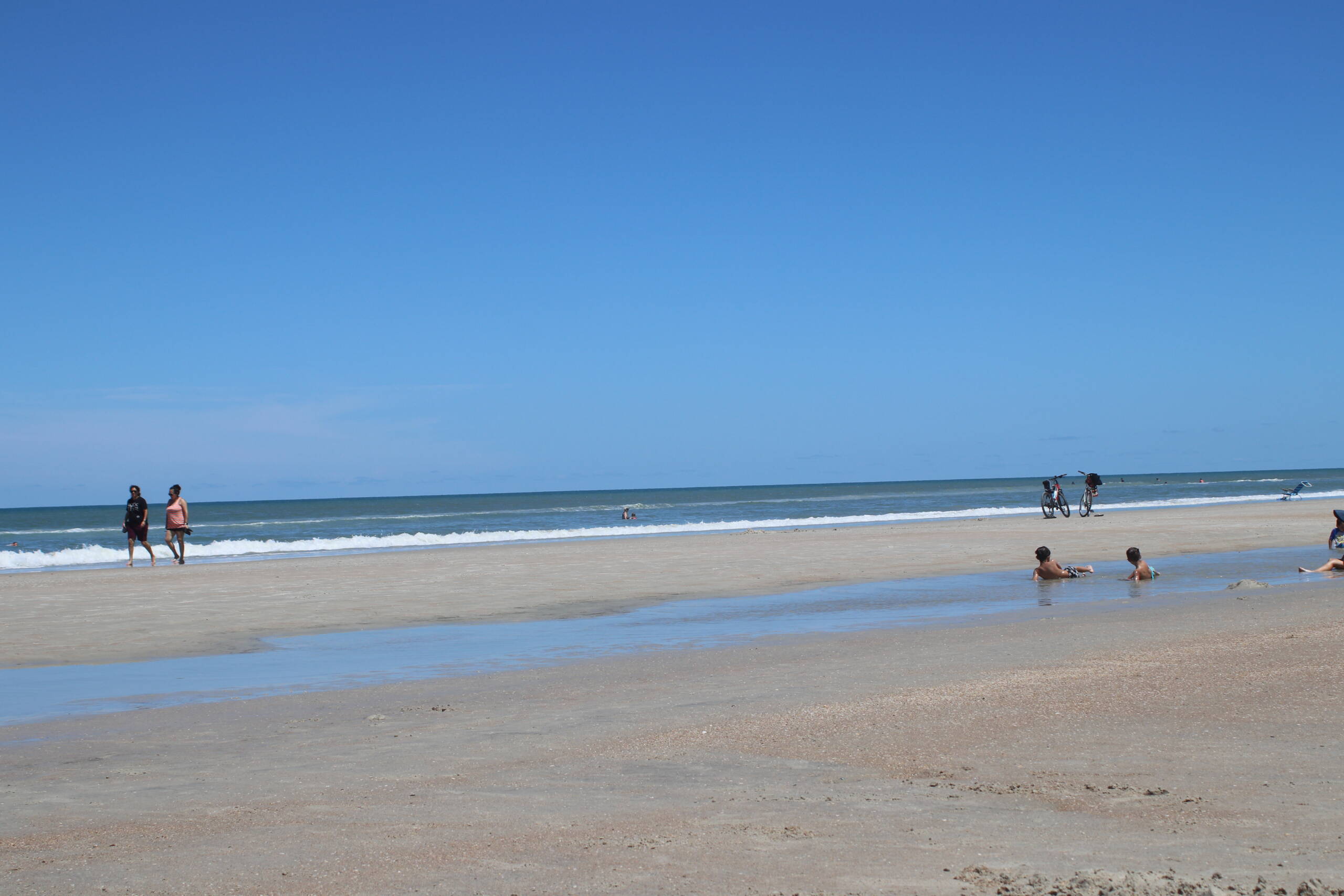
The best tide pool ever is the Sebastian Inlet Tidal Pool, three hours south of us, located in Sebastian Inlet State Park with fish, crabs, starfish, shells, shrimp, squid, and lobster. You can even see manatees sometimes.
Mosquito Lagoon
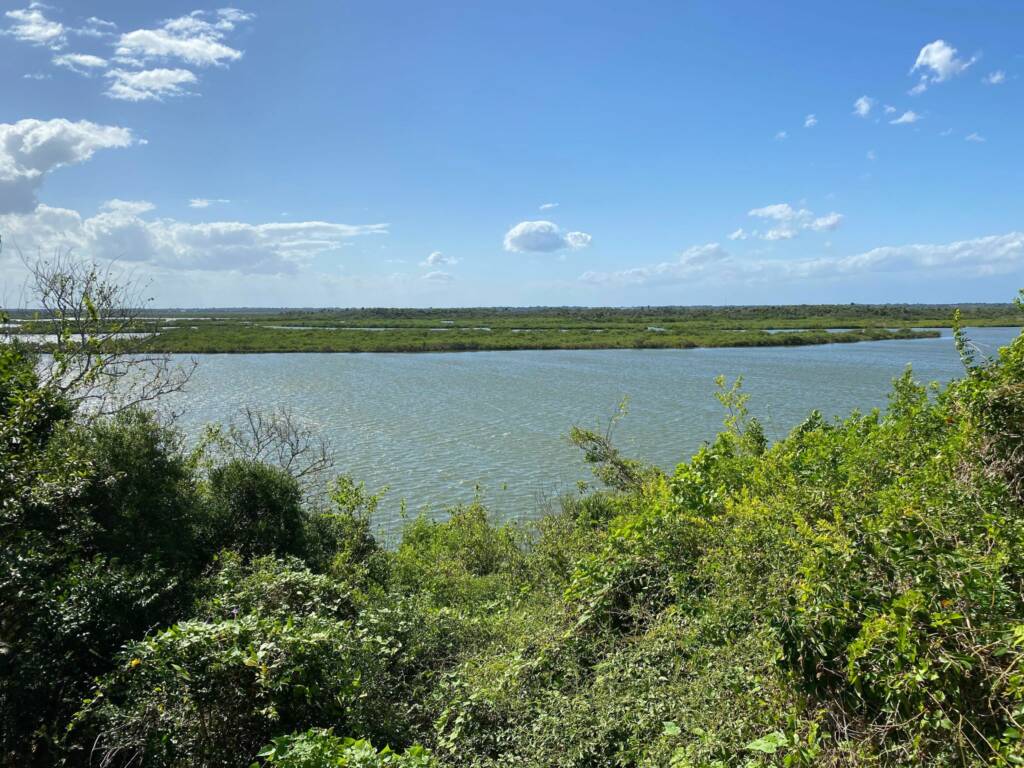
Across A1A from our favorite beaches is Mosquito Lagoon, a large estuary that runs along the Central Florida coast. You can see dolphins playing while manatees and alligators swim silently by.
An estuary is a place where fresh meets salt creating brackish water, a mixture of both.
Houses sit along Mosquito Lagoon, and we found a little neighborhood with a small cove where the manatees love to swim. You can walk down to the water’s edge and get close enough to touch them! We love to visit that little spot.
In this podcast, I talk about Mosquito Lagoon along with Florida and other states in the South: Ultimate Extravagant USA Road Trip I: Southern States. Take a listen if you want to learn more about southern states on this whirlwind tour.
Birdwatching
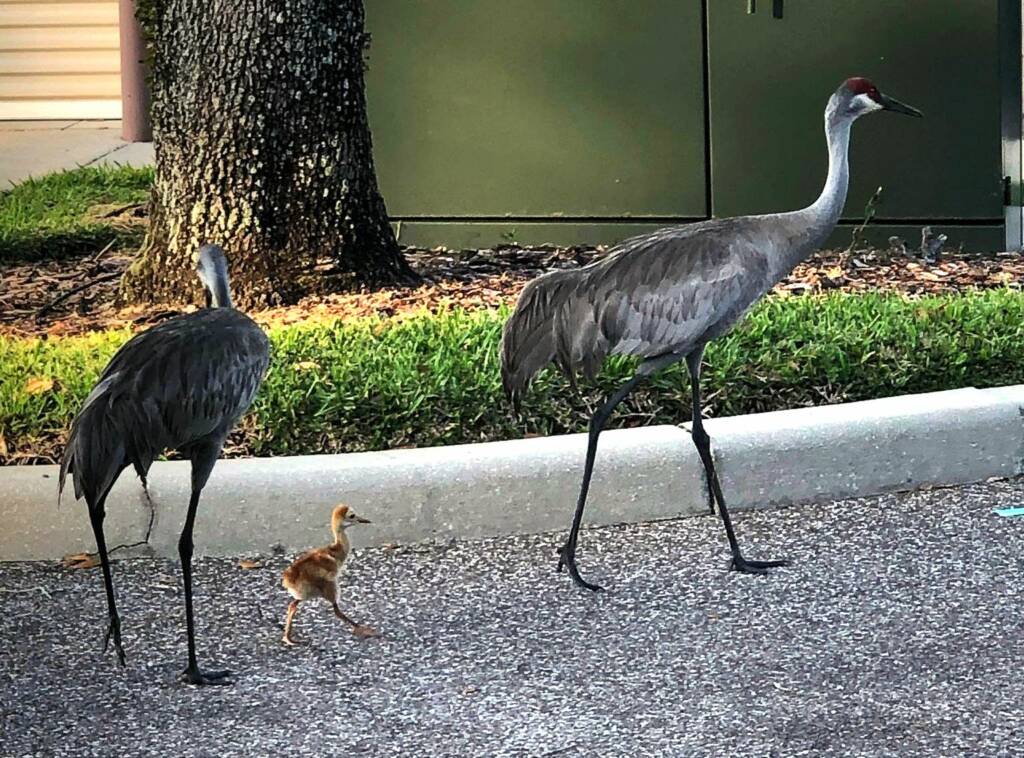
Birding is very popular in Florida. We have our own collection of beautiful birds from majestic hawks and eagles to the Sandhill Cranes that leisurely walk around our neighborhood. During the winter, we also get many lovely, feathered visitors.
Merrit Island is the place serious bird watchers go. Merrit Island is actually a peninsula that touches the mainland in Volusia County extending down south of Cocoa. It is surrounded by the Indian River, Mosquito Lagoon, and the Banana River further south. Cape Kennedy Space Center sits on Merrit Island. North of Cape Kennedy (another amazing field trip!) is Merrit Island National Wildlife Refuge, a beautiful look at natural Florida and a sanctuary for more than 330 recorded species of birds. If you visit, bring binoculars, a bird guide, and your camera with telephoto lens.
Fauna (Animals)
Beyond birds, there are many fascinating animals in the area that we learn about naturally.
We often see dolphins playing cheerfully a few yards away and sometimes even sight a shark!
Reptiles like little lizards (always underfoot), snakes, turtles, and tortoises love the Florida sunshine. Sea turtles lay their eggs on the shore, so we always look for nests, but never get too close.
If you walk along the beach and bring a flashlight, you can shine it randomly on the sand and see little crabs scurrying around. My grandchildren love to chase them, but they never catch them – they burrow right back down into the sand.
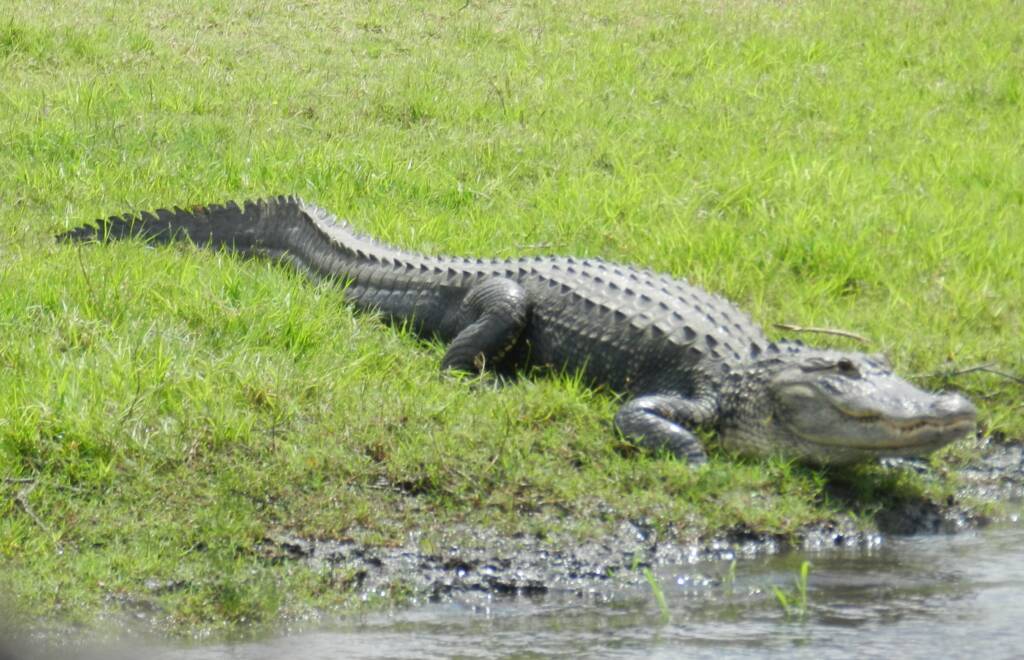
Florida children have to learn about alligators to stay safe. If there is a body of fresh or brackish water, there is definitely at least one alligator who lives there.
- They have a natural fear of man as long as they are not fed by humans, so we NEVER feed them.
- Alligators feed at dawn and dusk so we avoid walking near water at those times.
- Small children and dogs are about the size of their favorite prey, so we keep them away from lakes, rivers, and wet places.
- Fiercely protective of their young, if you hear an alligator hissing, FLEE!
Flora (Plants)
Seaweed, beach grass, and sea oats are common at the beach. When you wander around the islands or land surrounding Mosquito Lagoon, you find over 2,000 species of plants.
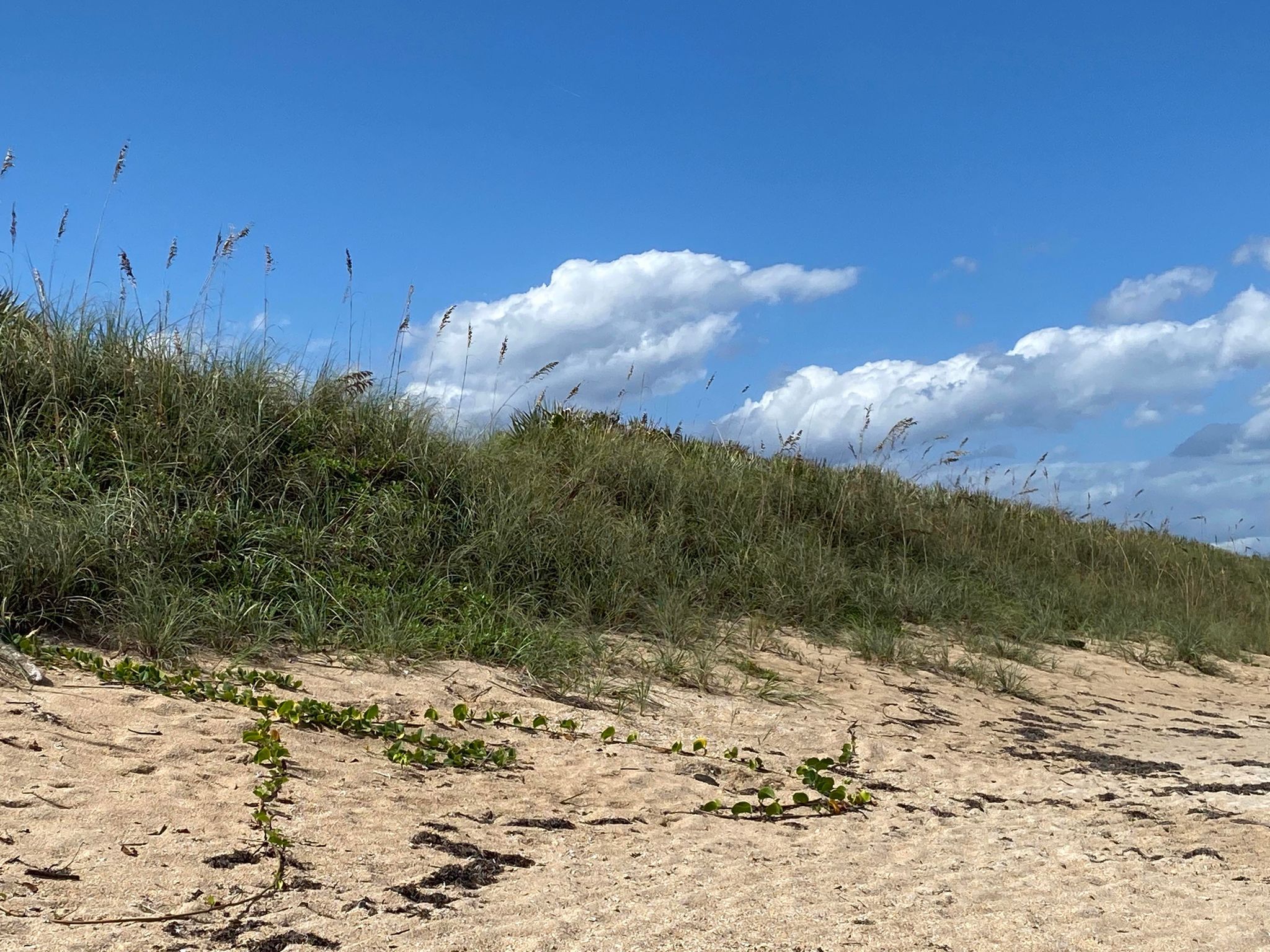
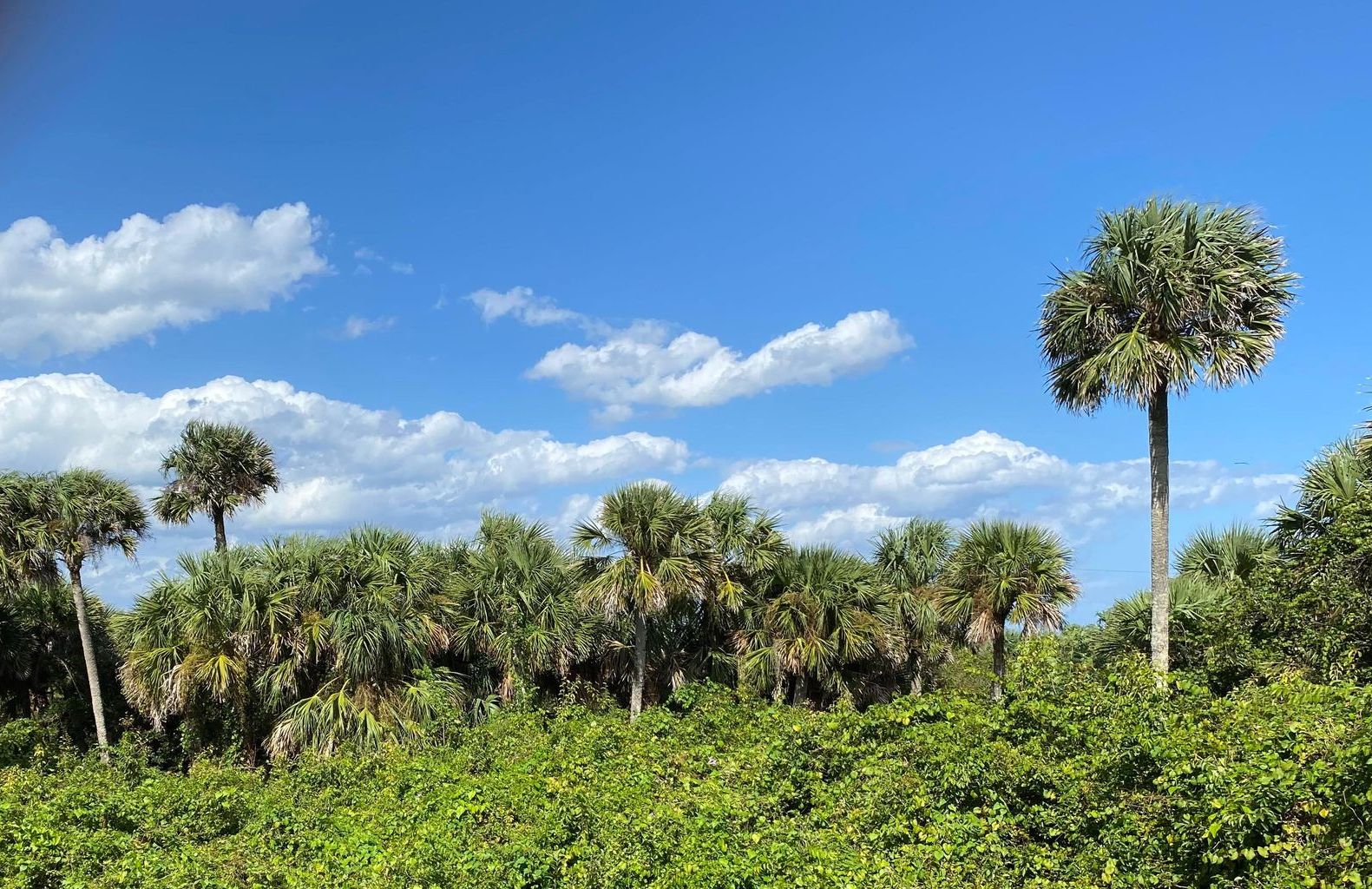
Our favorite are palm trees and the amazing Mangrove trees.
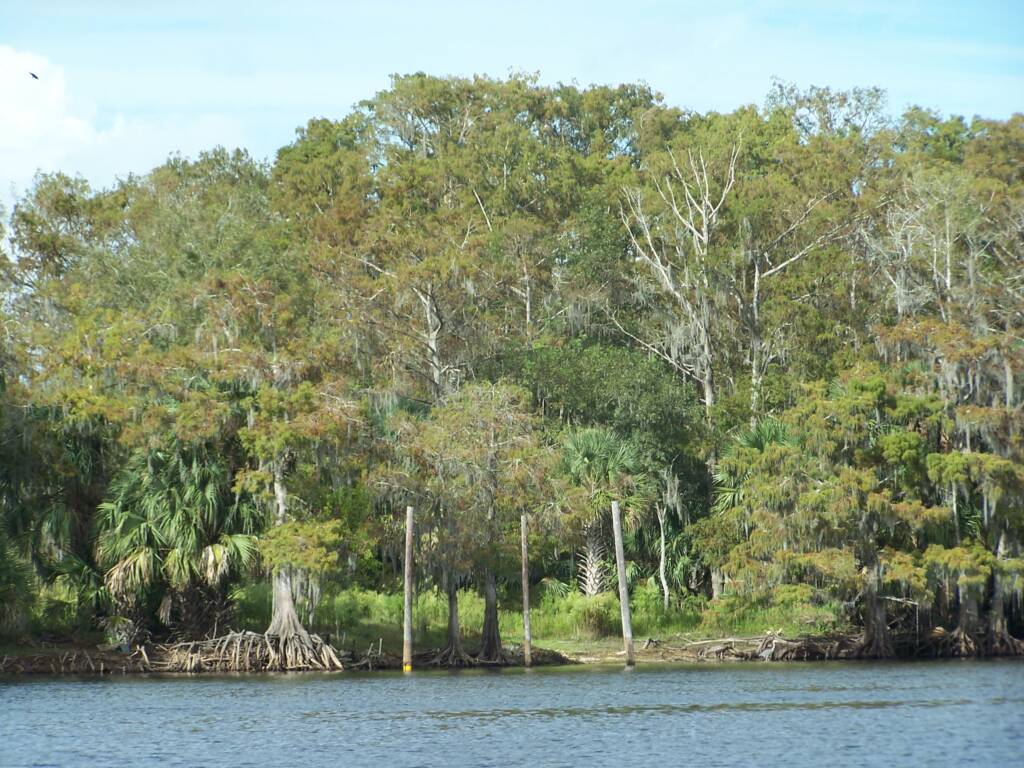
“Look at that tree! It’s growing right out of the water!” And thus begins our study of these amazing salt water-tolerant trees. They grow right along the coasts of coastlines of estuaries, rivers, and lakes. These tropical trees have a tangled mass of roots that you can see above ground.
Mapping the Area
Because Merrit Island, Mosquito Lagoon, and our favorite beaches are close to Cape Canaveral, we love to pull out maps and see how everything is located. Because of water inlets and peninsulas, we are not able to get to some things as the bird flies but have to drive the long way around. Looking at maps is a fun way to understand why we drive north and then head southeast to get to the Ponce Inlet Lighthouse.
My kids would say, “If we could just walk across the water at the end of this park, we could get to Ponce Inlet and see the lighthouse.”
It’s much easier to get everywhere by boat, of course than car, but we don’t own one, but maps give my kids and grandkids a sense of where the water flows through rivers, inlets, lagoons, and around little islands.
My favorite Homeschool Geography Resources
As you can guess, we have a whole shelf of oceanography picture books and living books to satisfy the curiosity that flows out of our adventures, as well as a collection of books about our feathered friends.
We also have shell and bird guidebooks. Often a field trip, day at the beach, or chance sighting of an animal in the backyard or day of homeschooling outside will make my children or grandchildren curious. There’s always a book to satisfy their curiosity!
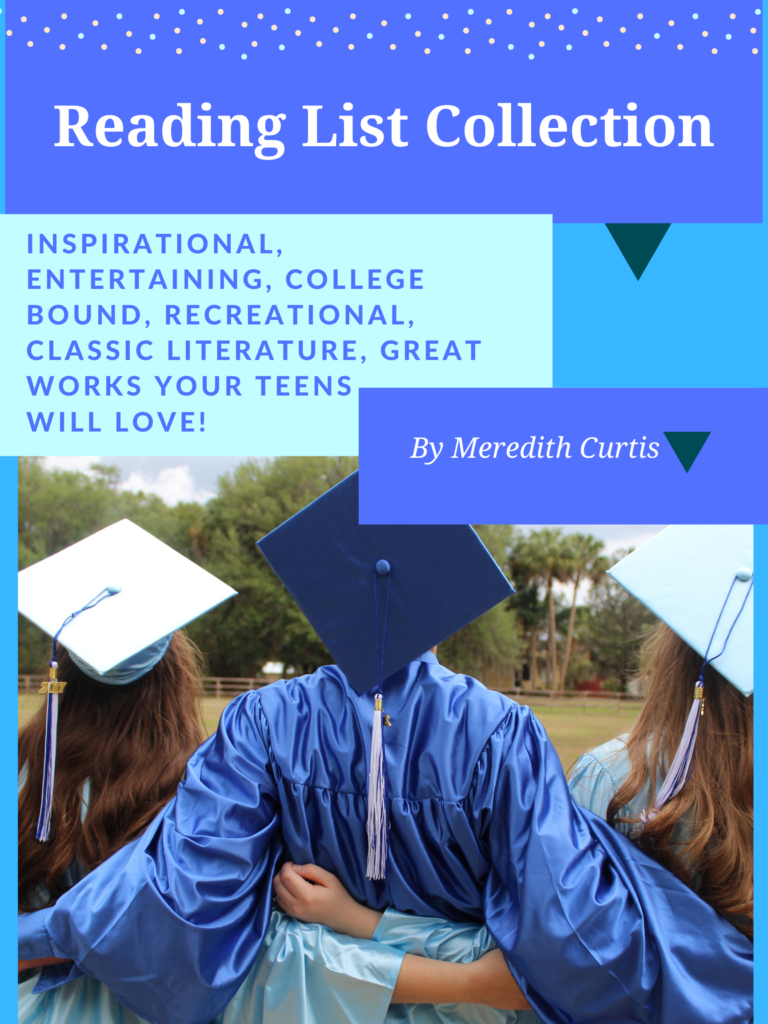
Speaking of books, I want to bless you and your family with an amazing Reading List Collection for high schoolers Grab your copy when you subscribe to our (Powerline Productions) updates. Grab your freebie HERE.
Sea World
Over the years, I have done several oceanography unit studies with my own children and in home school co-ops. Besides many field trips to the beach and Mosquito Lagoon, we love getting year passes at Sea World. Though it is an hour away, we enjoy several field trips during the year. The kids get to see dolphins, beluga whales, sea turtles, stingrays, penguins, sea lions, pelicans, sharks, orcas, flamingos, and walruses in a safe way. Did I mention the fun rides and animal shows? It is always so good to learn about animals when you have seen them up close first.
As you can see, we love to travel to learn US geography – starting with nearby cities, beaches, and parks. There is so much to learn near you, too. I hope you have as much exploring as we do!
One of my favorite homeschool geography resources to recommend is to read Reimagine US Geography.
Until next time, Happy Homeschooling!
This post is part of a series of homeschool snapshots. No two families are alike so why should your homeschool. Head to the Event Page to read the rest of the stories and find your tribe.

Meredith Curtis, homeschooling mom of 5 and Grand-Merey to 6, loves encouraging families in their homeschooling adventure! She is the author of God Bless the USA Exploring States & Territories, Americana Newspaper Reporting, HIS Story of the USA, and Healthy Living for Christian Teens. A curriculum creator, she also teaches US Geography (and other courses) online at True North Homeschool Academy. You can find Meredith at Instagram, Pinterest, Facebook and on her blog, podcast, and online store.