
Evan-Moor Science Workbooks Encourage Exploration
Over the years, science has been a fun subject to learn as a family and study together. As my oldest is looking to high school, and also as my younger two students, in 4th and 6th grade are growing, we need to change how we are learning and adapt as their school needs change. This year, we chose a more independent route for science and everyone is working on their own.
We’ve been homeschooling for 10ish years and for the first time we are using workbooks for one of our core content subjects. It’s the right fit now for two of my students. This year, thanks to being a part of Timberdoodle’s Blog Team, we are using Science Lessons & Investigations workbooks for two of my students. They are getting some hands-on science learning at our co-op this year and then using their workbooks on the other days at home because we love science! The oldest is using General Science 101.

Science Lessons & Investigations are available for grades 1-6, published by Evan-Moor, a secular curriculum company used by both homeschoolers and public schools. They can be are available from Timberdoodle and we are using the 4th grade and 6th grade level books in our homeschool this year.
Why use workbooks for science
Using workbooks for science is new this year, we have not studied science this way before. I’m not usually a fan of workbooks in homeschooling because there are so many other ways to learn than sitting at a desk. Over the years we have enjoyed reading aloud and lots of field trips and outdoor explorations. We have done projects and watched documentaries and followed our interests for unit study explorations.
Our goals for using workbooks for our homeschool science include:
- Building independent learning skills
- Gaining understanding and creating charts and graphs of information
- Building handwriting practice into other areas
- Intentionally adding vocabulary and word game activities
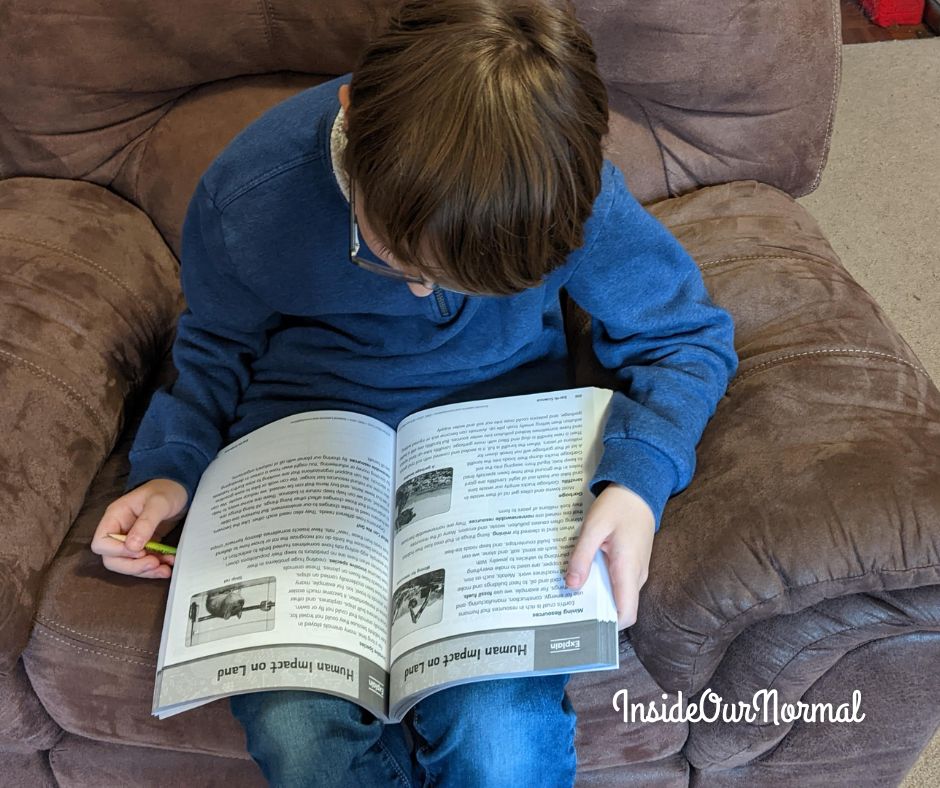
As our family life changes and my students grow, using the Science Lessons & Investigations books has been a great fit. My students are learning to work independently and getting more traditional practice with vocabulary and comprehension activities, and I can focus my attention in other places while they are working.
This year, I realized that one thing we haven’t done much with was looking intentionally at charts and graphs as a way to absorb information. I wanted to work on that with my boys and this science curriculum is helping us achieve that goal too.
How we used Science Lessons and Investigations
Each level has 12-14 units to complete over the course of the year. We do science three days a week, and at that rate we have been completing a unit in two weeks. I am also assigning videos from BrainPop alongside our workbook activities. My students begin each unit with either an exploration activity or a reading to introduce the topic followed by vocabulary activities for the new words learned in the unit. I like to save the comprehension questions for week 2 as a way to review. The rest of the days they complete the projects and prompts in the unit.

Each Unit in the Science Lessons and Investigations Book follows the same pattern of learning:
- Engage: Teacher introduction, unit overview
- Explore: A hands on activity or lab and discussion
- Explain: A independent reading and related Vocabulary
- Evaluate: Vocabulary and Comprehension activities
- Extend: Creative activities to enrich learning and deepen understanding about the topic
I really like the different activities that come with each unit. In the 4th grade book while learning about Earth Science the students were encouraged to go learn on their own beyond the workbook about earthquakes and create a poster about being ready for the natural disaster. My 6th grader got excited about drawing extra planets in a comparison drawing he was assigned while reading about Outer Space. There are also typical activities like crosswords and fill in the blanks to complete as well. For my creative kids filling out comic strips to tell the life cycle stories has been a favorite as well.

Science Workbooks for Outside the Box Kids
For my Outside the Box kids I was nervous about how they would do being handed a workbook each day instead of the hands-on science and interest-led unit studies they were used to but they have enjoyed the routine of the workbook and they still get to be creative in how they show the concepts in each unit. The writing required has been the right level for them and the pages are not too crowded for their oversized handwriting most of the time.
